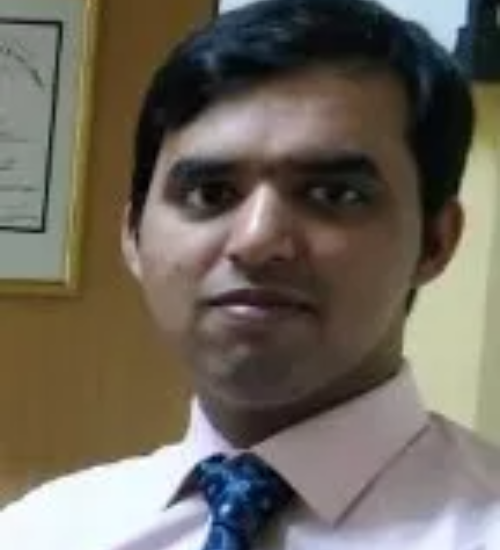
Dr. Shreekantha K S provides orthopedic consultations and surgical care for conditions affecting bones, joints, ligaments and the spine. His areas of expertise include joint replacement, sports injuries, arthroscopy and selected spine disorders.
Fast-Track Knee Replacement uses an enhanced recovery approach that emphasizes early mobilization, pain management and structured rehabilitation after knee replacement surgery. Dr. Shreekantha K S has specialized training in this technique, which may allow suitable patients to begin walking with assistance within hours of surgery.
Total knee replacement involves replacing damaged knee joint surfaces with artificial components. It may be recommended for patients with advanced arthritis, persistent knee pain and reduced mobility when appropriate non-surgical treatments are insufficient.
Joint replacement surgery is performed to restore function and reduce pain in severely damaged joints. The choice of procedure depends on the patient's diagnosis, joint condition, overall health and functional requirements.
Hip replacement surgery may be considered for patients with severe hip arthritis, persistent pain or advanced joint degeneration. The procedure replaces damaged joint surfaces with artificial implants to improve mobility and reduce pain.
Knee arthroscopy is a minimally invasive surgical procedure used to examine and treat selected problems within the knee joint. It may be suitable for specific meniscus injuries, cartilage conditions and ligament-related problems.
Shoulder arthroscopy uses a small camera and specialized instruments to diagnose and treat selected shoulder joint conditions through small incisions. It may be used for certain ligament, tendon and joint injuries.
Anterior Cruciate Ligament reconstruction is a procedure used to restore knee stability after selected ACL injuries. Surgical treatment may be considered for patients with significant instability, associated injuries or high physical activity requirements.
Posterior Cruciate Ligament reconstruction may be considered for severe PCL injuries causing persistent knee instability. Treatment depends on ligament damage, associated injuries and the patient's activity level.
Meniscus tears may cause knee pain, swelling, locking and restricted movement. Treatment may include physiotherapy, activity modification or arthroscopic surgery depending on the tear pattern and symptoms.
Meniscus repair surgery aims to preserve suitable damaged meniscal tissue and restore knee function. Arthroscopic repair may be recommended for certain tears based on location, blood supply and tissue quality.
Sports injuries may involve ligaments, tendons, cartilage, muscles and joints. Dr. Shreekantha K S has specialized interests in sports medicine and arthroscopic procedures for knee and shoulder injuries.
Ligament injuries may cause joint instability, swelling and pain. Depending on the severity, treatment may include bracing, physiotherapy, activity modification or surgical reconstruction.
Diagnostic arthroscopy involves examining internal joint structures using a small camera. It may help assess selected joint conditions when other diagnostic methods do not provide sufficient information.
Orthopedic spine surgery may be considered for selected spinal disorders causing persistent nerve compression, deformity or instability. Dr. Shreekantha K S has training in the management of disc disease, spondylosis and spondylolisthesis.
A slipped or herniated disc may cause back pain, radiating leg pain, numbness or weakness. Treatment depends on symptoms and neurological findings and may include medication, physiotherapy, injections or surgery when appropriate.
Spondylosis refers to age-related degenerative changes affecting the spine. Management may involve exercise therapy, medication, rehabilitation or surgical treatment for selected patients with significant nerve compression.
Spondylolisthesis occurs when one vertebra slips relative to another. Treatment depends on the degree of displacement, spinal stability and associated symptoms and may include physiotherapy or surgery.
Orthopedic trauma care focuses on injuries affecting bones and joints, including fractures and complex musculoskeletal injuries. Treatment may involve immobilization, surgical fixation and rehabilitation.
Fracture management aims to achieve proper bone alignment, healing and restoration of function. Depending on the injury, treatment may include casts, braces, surgical fixation and physiotherapy.
Osteotomy is a surgical procedure that involves cutting and realigning a bone to correct selected deformities or improve joint alignment. It may be considered for certain orthopedic conditions following specialist assessment.
Chronic knee pain may result from arthritis, ligament damage or cartilage disorders. Treatment may include medication, rehabilitation, physiotherapy, injections or surgery based on the underlying cause.